5 Golf Fitness Moves Every Woman Golfer Needs in Her Routine 💪⛳
Want to hit longer drives and play pain-free golf? These five exercises - squats, press ups, deadlifts, jumps, and slam balls - will transform your game. The best part? You can do most of them at home!
Golf fitness does not have to be complicated. Or scary. Or involve a ton of equipment you do not have.
The reality is this: golf is an athletic movement. If you want to hit it farther, play without pain, and stay on the course for decades, you need to build strength, mobility, and power off the course.
The good news? The exercises that help golfers the most are pretty straightforward. Trainers who work with professional golfers (we are talking LPGA Tour players, top amateurs, and elite competitors) consistently recommend the same core movements. These are not trendy. They are not flashy. They just work.
Here are the five exercises that strength and conditioning coaches use with golfers at every level, from tour pros to complete beginners.
The 5 Golf-Specific Exercises Trainers Swear By
1. Squats (The Foundation)
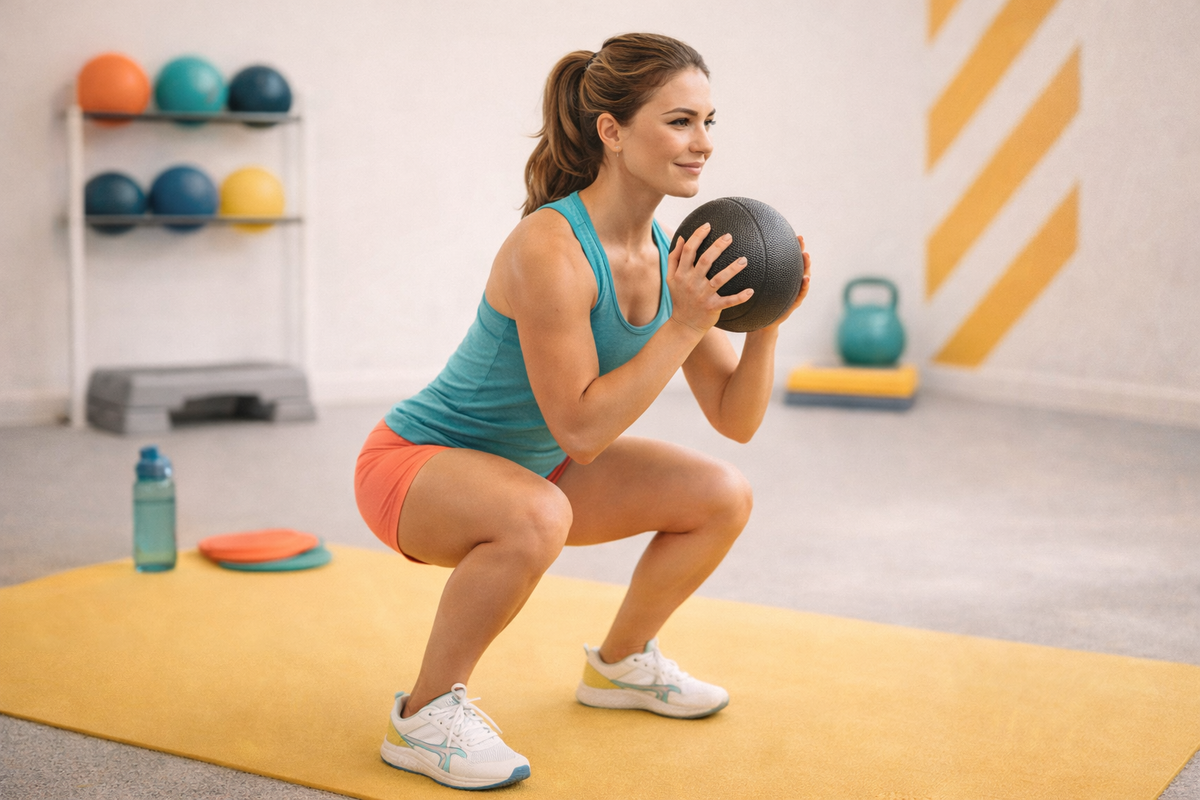
What it does: Builds lower body strength in your glutes, quads, and hamstrings. Your legs generate a ton of power in your golf swing, and squats make them stronger and more stable.
Why it matters for golf: A strong lower body gives you a stable base to rotate from. If your legs are weak, your upper body has to work harder, which usually means inconsistent contact and less power.
How to do it: Feet shoulder-width apart, chest up, sit back like you are sitting in a chair. Go as low as you can while keeping your knees tracking over your toes. Stand back up. That is it.
Modification: If you are new to squats, use a chair. Lower yourself until you lightly touch the seat, then stand back up. You can also hold onto something for balance while you build strength.
2. Push-Ups (Upper Body Control)
What it does: Builds strength in your chest, shoulders, and triceps. Also works your core because you have to stabilize your body throughout the movement.
Why it matters for golf: Upper body strength gives you control through impact. It also helps with consistency—if your arms and shoulders are strong, they are less likely to break down when you are tired on the back nine.
How to do it: Hands slightly wider than shoulder-width, body in a straight line from head to heels. Lower yourself until your chest nearly touches the ground, then push back up. Keep your core tight the whole time.
Modification: Do them on your knees or against a wall or counter if full push-ups are too hard right now. You will build up to the full version.
3. Deadlifts (Posterior Chain Power)
What it does: Strengthens your entire posterior chain—hamstrings, glutes, lower back, and upper back. This is the chain of muscles that runs down the back of your body, and it is critical for golf.
Why it matters for golf: Your posterior chain controls your posture, your rotation, and your ability to generate power without hurting your back. Strong glutes and hamstrings take stress off your lower back during your swing.
How to do it: Start with a resistance band or light weight. Stand on the band (or hold weights at your sides), hinge at your hips (not your waist), keep your back flat, and push your hips back. Then drive through your heels and squeeze your glutes to stand back up.
Progression: Once you have the movement down with a band, you can progress to dumbbells, kettlebells, or a trap bar (if you have gym access). Trap bar deadlifts are especially popular with golf trainers because they allow you to lift heavier weight safely.
Important: Get the form right before you add weight. Bad deadlift form can hurt your back. Good deadlift form protects your back and makes you stronger.
4. Jumps (Explosive Power)
What it does: Builds explosive power in your legs and hips. Teaches your body to generate force quickly.
Why it matters for golf: Clubhead speed comes from the ground up. The faster you can generate force through your lower body, the faster your clubhead moves. Jumps train that explosiveness.
How to do it: Start with simple squat jumps. Squat down, then explode up off the ground. Land softly with bent knees to absorb the impact. Reset and repeat.
Modification: If jumping is too high-impact for your knees or joints, do squat-to-calf-raises instead. You still get the explosive push without leaving the ground.
5. Medicine Ball Slams (Rotational Power)
What it does: Develops rotational power and core strength. Trains your body to generate and control force through rotation—exactly what you do in your golf swing.
Why it matters for golf: Golf is a rotational sport. Medicine ball slams teach your body to rotate powerfully while staying stable. They also feel really satisfying when you are stressed.
How to do it: Hold a medicine ball (or weighted object) overhead. Rotate your torso and slam the ball down to the ground as hard as you can. Pick it up and repeat.
Modification: If you do not have a medicine ball, you can do rotational throws with a light dumbbell or even just practice the rotation without weight to build the movement pattern.
The Exercises at a Glance
| Exercise | What It Builds | Why It Matters for Golf |
|---|---|---|
| Squats | Lower body strength | Stable base for rotation, power generation |
| Push-Ups | Upper body strength + core | Control through impact, consistency |
| Deadlifts | Posterior chain (glutes, hamstrings, back) | Posture, power, protects lower back |
| Jumps | Explosive power | Clubhead speed, force generation |
| Medicine Ball Slams | Rotational power + core | Develops golf-specific rotation |
How to Actually Use These Exercises
You do not need to do all five every day. You do not even need to do them all in one week. Here is a realistic approach:
Beginner plan (2 days per week):
- Day 1: Squats, push-ups, deadlifts (3 sets of 8-10 reps each)
- Day 2: Jumps, medicine ball slams (3 sets of 6-8 reps each)
Intermediate plan (3 days per week):
- Day 1: Lower body focus (squats, deadlifts, jumps)
- Day 2: Upper body focus (push-ups, core work)
- Day 3: Power focus (jumps, medicine ball slams, explosive movements)
Start with bodyweight or light resistance. Focus on form. Add weight or reps as you get stronger.
The Part Nobody Wants to Hear
If you have never done these exercises before, or if you have any injuries or concerns, talk to a professional first. A physical therapist, personal trainer, or strength coach can make sure you are doing these movements safely and effectively.
Bad form can hurt you. Good coaching can change your game.
Also, fitness is not one-size-fits-all. These five exercises are great starting points, but your specific needs might be different. If something does not feel right, do not push through it. Modify or skip it and find what works for your body.
Why This Actually Matters
Here is the thing trainers will tell you: the golfers who play well into their 60s, 70s, and 80s are not just lucky. They are strong. They move well. They take care of their bodies off the course.
You can have all the swing lessons in the world, but if your body is not strong enough to execute the movements consistently, you will plateau. Or worse, you will get hurt.
Strength training for golf is not about looking a certain way. It is about building a body that can do what you are asking it to do—rotate powerfully, stay stable, absorb impact, and recover quickly.
These five exercises give you that foundation.
The Bottom Line
Squats, push-ups, deadlifts, jumps, and medicine ball slams. These are the movements that golf trainers use with everyone from tour pros to weekend warriors.
You can do most of them at home. You can start at any fitness level. You can modify them to fit your body and your goals.
Will they magically fix your slice? No. But they will make you stronger, more powerful, and more resilient. And that absolutely translates to better golf.
Start with one or two. Build from there. Your game (and your back) will thank you.
Now go lift something heavy and hit it far ladies. 💪⛳